Iranians Face Stunning Uncertainty Amid US War


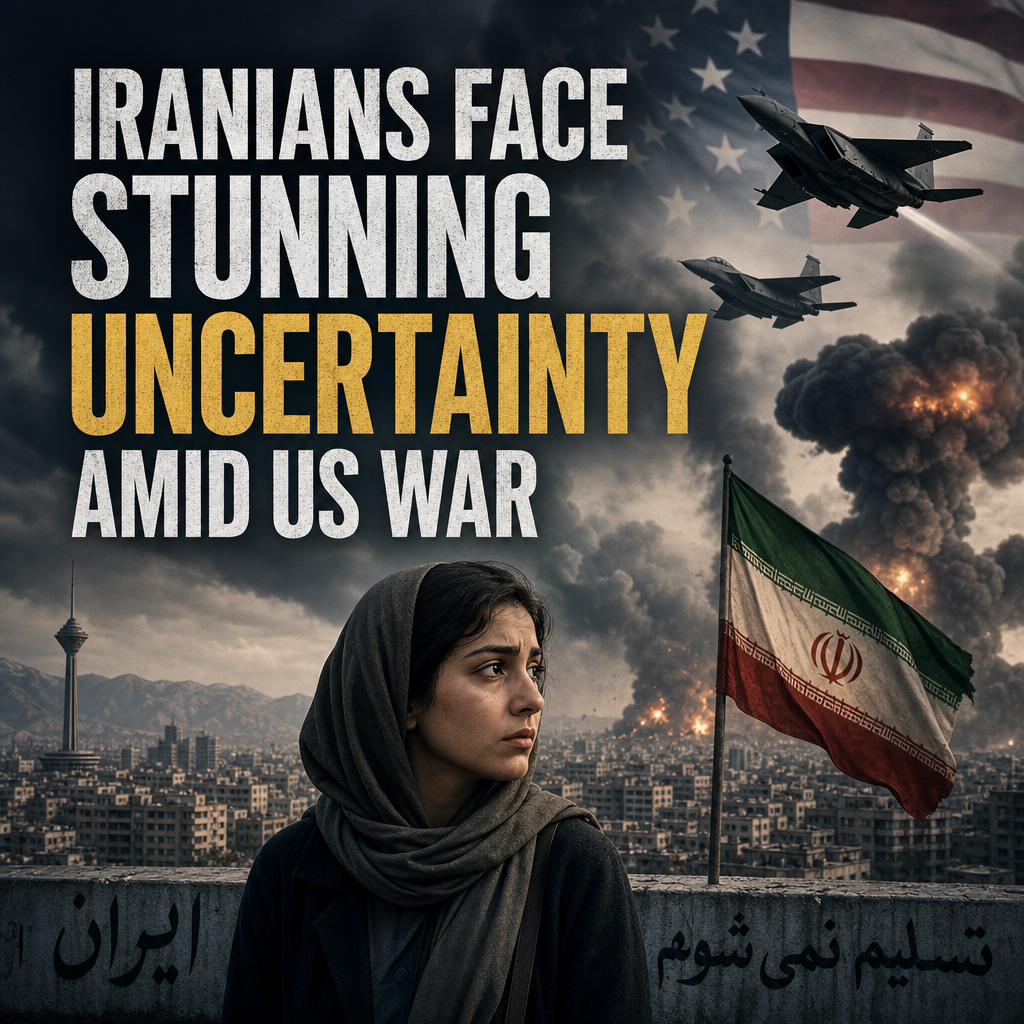
Iranians Face Stunning Uncertainty Amid US War as ordinary people confront a rapidly shifting reality in which daily routines, economic worries, and fear of escalation are all colliding at once. Across reporting from Al Jazeera, Sky News, and RT, one broad truth emerges: whatever political leaders say about strategy or deterrence, it is civilians who are absorbing the shock first.
The picture painted by the different outlets is not identical, and that matters. Al Jazeera’s reporting centers on the human cost inside Iran, showing how people are trying to work, travel, communicate, and plan for the next day while living under the cloud of conflict. Sky News frames the situation more through the lens of international security and military risk, emphasizing the possibility that the conflict could widen and draw in more actors. RT, meanwhile, tends to foreground the idea of US aggression and the damage caused by American intervention, presenting the war as a consequence of Washington’s choices rather than Tehran’s. Taken together, the coverage reveals a single crisis viewed through three distinct political and editorial lenses.



Iranians Face Stunning Uncertainty Amid US War at Home
For many Iranians, the most immediate burden is not simply the fighting itself, but the unpredictability surrounding it. When people do not know whether airports will stay open, whether prices will rise again, or whether communication systems may be disrupted, daily life becomes exhausting long before any direct strike lands nearby.
Al Jazeera’s account highlights that sense of suspended normality. People are still trying to get by, but “normal” has become a fragile idea. Shops remain open, families continue their routines where they can, and workers still commute when possible. Yet behind those visible routines is a constant awareness that the situation could change suddenly. That unease is compounded by the broader economic strain that has already weighed on Iranian households for years, making any new shock especially punishing.




The reporting also suggests that uncertainty is not just emotional; it is practical. Families may be deciding whether to stay put or relocate temporarily. Businesses may be delaying purchases, imports, or hiring. Students and travelers may be asking whether they can safely continue with plans that once seemed ordinary. In wartime, these are not small decisions. They shape whether a society can function at all.
Different newsrooms, different emphases
The contrast between the sources is useful because it shows how the same conflict can be narrated in competing ways.
Al Jazeera: civilians first
Al Jazeera’s framing is the most grounded in everyday consequences. Its focus is on the lived experience of Iranians who are neither policymakers nor military planners. That approach does not ignore politics, but it keeps returning to the social and psychological impact on ordinary people. In doing so, it helps explain why fear and uncertainty can be as destabilizing as any missile strike.
Sky News: escalation and international risk
Sky News approaches the war as part of a larger security crisis. Its coverage tends to ask what happens next: whether the conflict spreads, what allies might be pulled in, and how governments will respond diplomatically and militarily. That framing is important because wars are not contained by intention alone. Even if a government claims it wants limited action, the risk of miscalculation is always present. Sky’s angle reminds readers that uncertainty inside Iran is matched by uncertainty in the region and beyond.
RT: anti-US framing and blame
RT presents the conflict through a strongly critical view of the United States, stressing the costs of US military power and intervention. That perspective resonates with audiences skeptical of Washington’s foreign policy, and it does reflect a real debate: many analysts argue that external pressure, sanctions, and military threats often intensify instability rather than resolve it. But RT’s reporting also needs to be read with care, because it often filters events through a clear geopolitical agenda. Even so, its coverage reinforces one point that other sources do not fully dispute: civilians usually pay the price for strategic decisions made far above their heads.
What the coverage agrees on
Despite their differences, the sources converge on a few key realities:
– The conflict has made life less predictable for Iranian civilians.
– The economic and psychological pressure on households is severe.
– Escalation remains a real risk, not a hypothetical one.
– There is no easy path back to stability without some form of political de-escalation.
Perhaps the most striking common thread is that uncertainty itself has become a weaponized condition. When people cannot plan, they become more vulnerable. When institutions cannot provide clarity, rumors spread faster than facts. And when the future is clouded, even small disruptions feel larger than they are.
The bigger question: what does “security” mean?
The war also forces a more uncomfortable question: security for whom? Governments often justify military action by invoking deterrence, self-defense, or regional stability. But those arguments can sound hollow to families worried about fuel, food, wages, and whether a loved one will make it home safely.
From a broader perspective, the coverage suggests that military pressure may create short-term tactical gains while deepening long-term instability. That does not mean there are easy alternatives. Diplomacy, restraint, and negotiation are often slower and less dramatic than force, and they may fail too. But the reports reviewed here make clear that a cycle of retaliation would almost certainly widen the humanitarian cost.
The most balanced conclusion is also the most sobering: no single headline fully captures what is happening. Iran’s people are not just watching a war on television; they are living inside its uncertainty. Meanwhile, the world is still debating whether the current path leads to deterrence, disaster, or something in between. Until there is a real reduction in hostilities, that uncertainty will remain the defining feature of life for millions.